


*
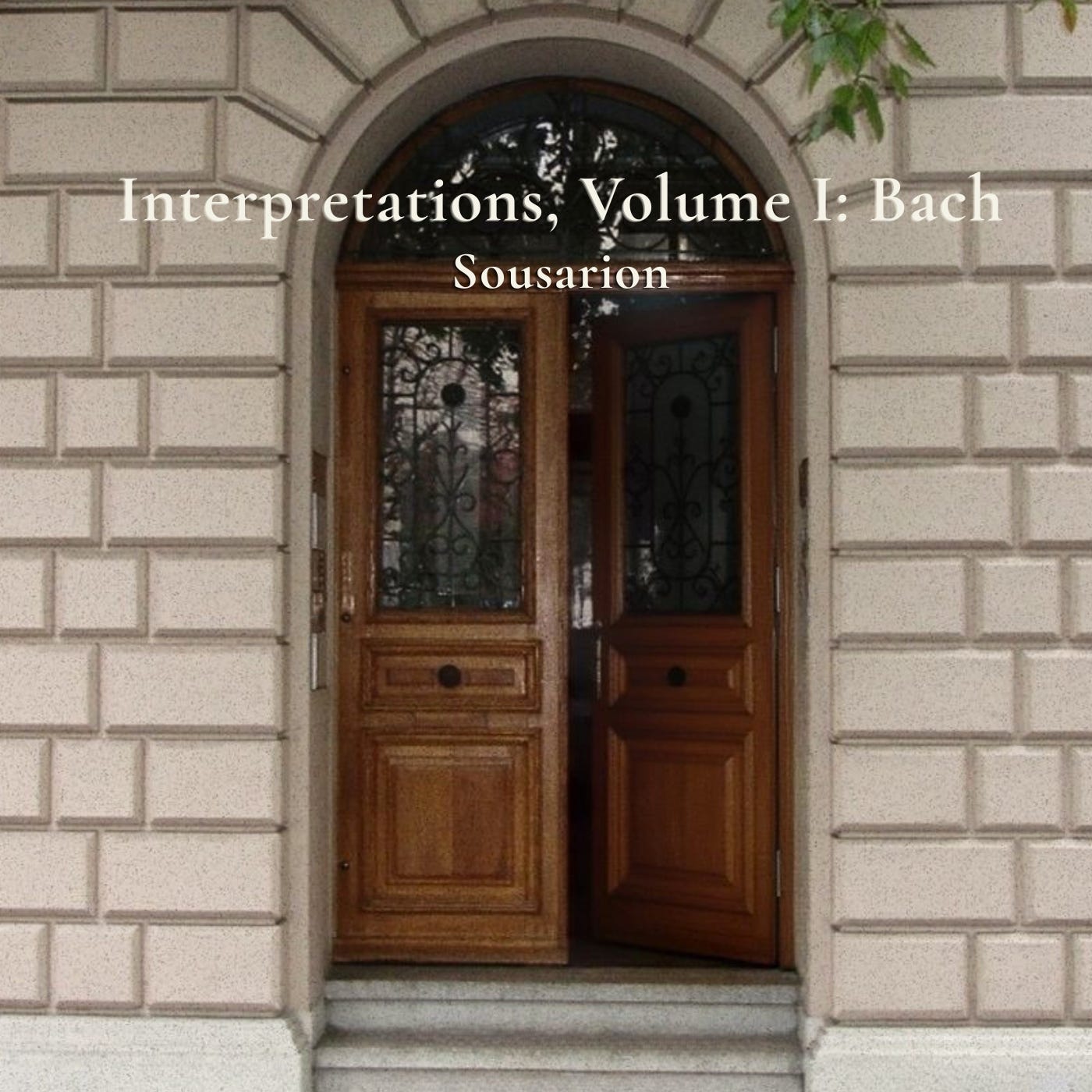
I’ve released my first recording as a pianist:
Interpretations, Volume I: Bach.
The title is deliberate.
Along the spectrum of artistic creation, interpretation occupies a curious position: it creates something that is not entirely its own.
An interpretation is not a genuinely new work of art; it is the product of study of a work of art, in this case a musical composition. It is a sort of reproduction of the work of art. Let’s call that the bare minimum.
But interpretations of a higher caliber also add something new, something that is very difficult to pin down. Whatever that something is, it is distinct from every other reproduction of the original work.
You could say it creates a new relationship to the original. It shows you a new way of experiencing the art.
Therefore, an interpretation is potentially both constructive and deconstructive at the same time. How? If a listener knows a particular composition very well and has heard several great interpretations of the composition, they might eventually settle on a favorite. In other words, one that is, or at least arrives closest to, the way the composition should sound.
The composer created something resembling an ideal: the composition. A particular recording may then become the listener’s reference for its realization, the sound against which later interpretations are judged. The relationship of the interpreter, the original work of art, and the composer has become intertwined.
And then comes along a new interpretation. One that reveals an entirely different character. That compels the listener to experience the composition with a sense of freshness and (re)discovery. The sounds delight or offend the soul, for such music has hitherto been unheard.
What has happened to this composition, known through and through, perhaps even backwards? Suddenly years of experience and satisfying listening have been upended.
Earlier interpretations—even recordings once treated as definitive—lose their settled authority. Or, at the very least, that authority is called into question. Suddenly the relationship is insecure.
It’s even worse if the interpretation is powerful enough to alter the listener’s relationship with the composer. For with this rarest of interpretations, an entirely new character manifests in the work of art. One the composer may not have anticipated. One that appears to contradict the score, or at least everything the score has conventionally been understood to permit. The interpreter takes wild liberties with the composition, maneuvers drastically into territory wherein the composer stops and the interpreter begins composing. The lines are blurred, the waters muddied. The listener disheveled.
The interpreter has stuck their neck out in ways they probably should not. And yet they pull it off. Something truly special has been achieved. Is the interpretation not an entirely new work of art?
De l’art, l’art?
I will leave that for you to ponder.
For this, my first recording, I chose to interpret Johann Sebastian Bach. Concise by design. Three works. Seventeen minutes. A single arc.
Musical Narrative
Interpretations, Volume I: Bach begins in G major with Myra Hess’s arrangement of the chorale from Bach’s beloved Cantata BWV 147. The music emerges calmly, almost from within itself: a first breath, a path opening, life coming into motion.
From there, the program turns toward the relative minor. Bach’s Toccata in E Minor, BWV 914, does not sustain a single state. It searches, divides, improvises, gathers its voices, and drives forward. Its four sections make exploration the work’s very form.
The Toccata’s final turn toward major opens into—not Bach’s but—Domenico Scarlatti’s Sonata in E Major, K. 531. Motion remains, but its character changes. The sonata playfully passes its triplets between the hands with brightness and agility, closing the recording in effervescence and joie de vivre.
Birth. Exploration. Life released into pleasure.
The arc is complete.
Program
J. S. Bach: Jesu, Joy of Man’s Desiring from Cantata BWV 147, arr. Myra Hess
J. S. Bach: Toccata in E Minor, BWV 914
Domenico Scarlatti: Sonata in E Major, K. 531
Where to listen to the recording:


Purchase and download in lossless audio at Bandcamp
Release Credits
Performed by Sousarion
Recorded and produced by Scotch & Bonnet Music
Released May 19, 2026
Learn more about the recording series and production philosophy at Scotch & Bonnet Music.
From the links above, the recording is available through Spotify, Apple Music, YouTube, and Bandcamp.
Enter through the open door.
Listen carefully. Let the arc unfold.
Happy listening!
- Sousarion